
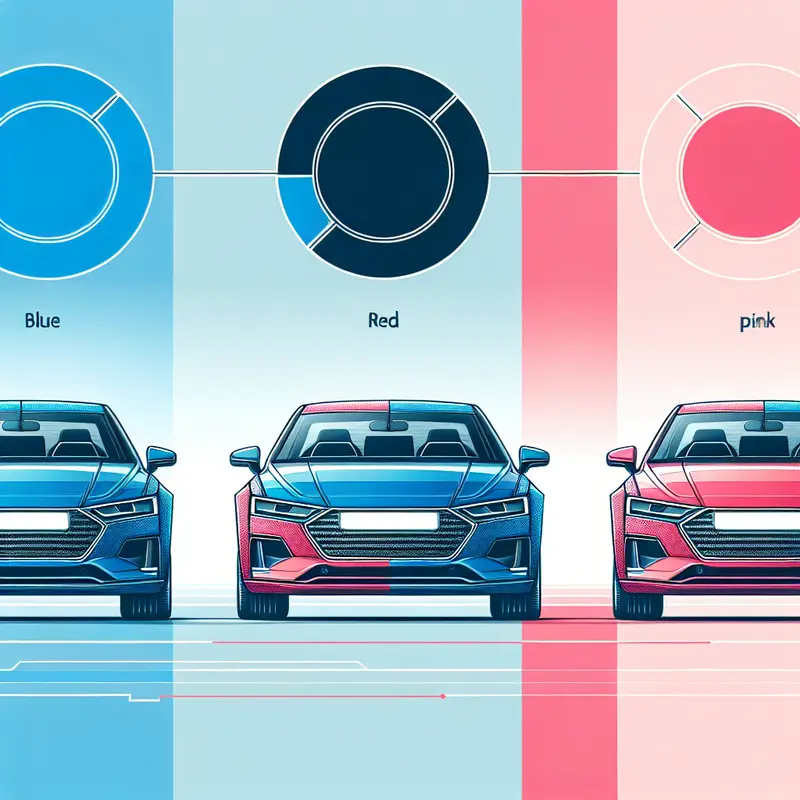
Choosing the Right Car Color: Blue, Red, or Pink? When it comes to choosing the color of your car, personal preferences play a significant role. However, there are certain factors to consider that go beyond just liking a specific color. Let's delve into the aspects of car color choices and how they can impact your overall driving experience. 1. Resale Value: Car color can influence the resale value of your vehicle. Neutral colors like white, black, and silver are generally more popular among car buyers and tend to retain their value better than more unique or bold colors like pink or bright red. 2. Visibility and Safety: The color of your car can also affect its visibility on the road. Bright colors like red, yellow, and orange are more visible in various lighting conditions, which can enhance safety by making your vehicle easier to spot by other drivers. 3. Maintenance: Dark-colored cars, such as black or navy blue, tend to show dirt, dust, and scratches more prominently than lighter shades. Light-colored cars are often easier to keep clean and maintain their appearance better over time. 4. Climate Considerations: In hot climates, lighter colors like white or silver can help reflect sunlight and keep the interior of the car cooler. On the other hand, in colder climates, darker colors can absorb more heat and potentially assist in melting snow and ice faster. 5. Personal Style: Ultimately, the color of your car is a reflection of your personal style and preferences. Whether you prefer the classic elegance of a black car, the sporty look of a red one, or the uniqueness of a pink vehicle, choose a color that resonates with you and makes you happy. In conclusion, the best color for your car is one that not only suits your taste but also aligns with practical considerations such as visibility, maintenance, and climate factors. Before making a decision, take the time to weigh the pros and cons of different car colors to ensure that you select the one that best fits your needs and lifestyle.

Choosing the Best Car Color: Blue, Red, or Pink? in OLIVE BRANCH, MS



Thank you for visiting our website. Let us help you find the perfect vehicle. Contact us if you have questions.
CONTACT USCheck Availability
*All fields are required
*Please enter a valid phone number: only 10 digits
*Please enter a valid email
*Please enter a valid email or phone
*Please enter a message: max. 5000 chars
I agree to receive SMS messages from Build-A-Brand Motors. I understand that I can reply STOP to end messages