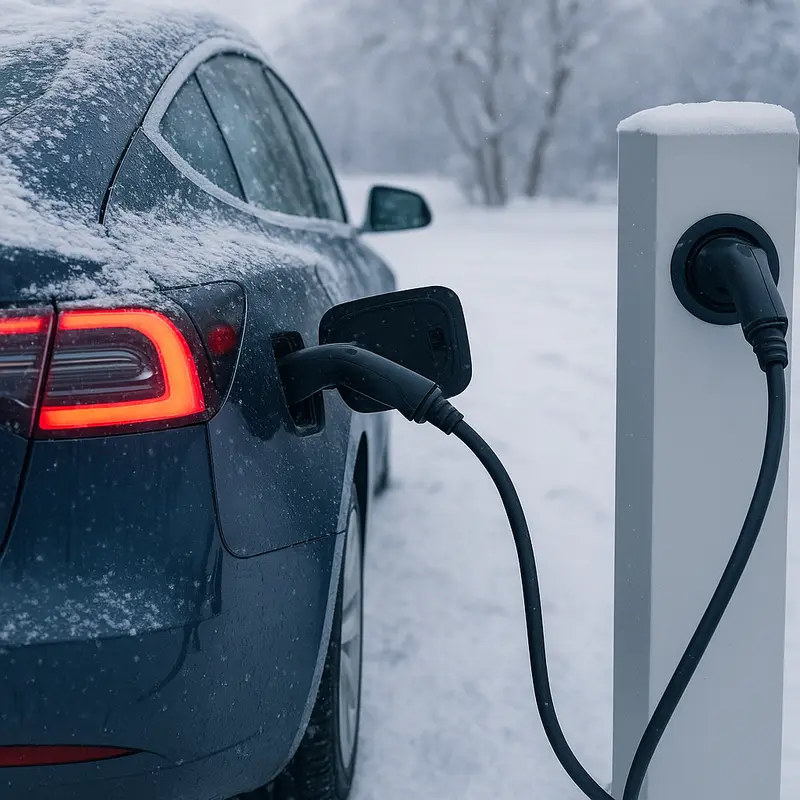
How to Charge an Electric Car in Winter — Practical Tips
Understand what cold does to your EV
Low temperatures reduce battery chemical activity, raising internal resistance. That means slower charging, temporarily reduced usable range, and more energy lost as heat. Modern battery management systems (BMS) mitigate this, but you should plan for some performance drop in winter.
Use preconditioning whenever possible
Most EVs allow cabin and battery preconditioning from the car or companion app. Schedule preconditioning to run while the car is still plugged in: the vehicle will warm the battery to an optimal charge temperature so charging is faster and more efficient when you depart.
Prefer Level 2 (AC) charging for routine use
Home or workplace Level 2 charging (≈7–11 kW) is gentle and efficient in cold weather. It replenishes range overnight and keeps the battery warm if the car remains plugged in. For regular daily use, this is the recommended option.
DC fast charging: use when needed, expect slower sessions
Cold batteries accept DC fast charge at reduced power until they warm up. Fast charging is fine for trips but may be slower and slightly harsher on the battery in winter. If you must fast-charge, try to precondition first or drive a short distance to warm the pack before plugging in.
Keep the car plugged in when parked in very cold weather
Leaving the EV plugged in lets the BMS maintain battery temperature and prevents deep discharge. This is especially helpful if your vehicle has active thermal management. If you have a garage, use it — even an unheated garage helps.
Set sensible state-of-charge (SoC) targets
For daily use, keep SoC between ~20–80% to protect battery longevity. For long trips in winter, charge to 90–100% when needed, but avoid leaving the car at 100% for long periods. Some cars let you set a temporary higher limit for trips.
Plan charging stops and allow warm-up time
Expect reduced range; plan more frequent stops on long drives. If possible, start with a warm battery: schedule departure after preconditioning or drive for 10–20 minutes before relying on high-speed charging for faster acceptance.
Monitor charging behavior and avoid repeated deep fast-charging
Cold weather increases wear risk from frequent high-power DC fast charging. Use DC fast chargers when necessary, but rely on Level 2 for regular top-ups to minimize stress on the battery.
Know your battery chemistry and vehicle features
LFP (iron-phosphate) batteries handle cold differently than NMC/NCA packs: they’re robust but may have different recommended SoC practices. Newer EVs with heat pumps and improved thermal management hold up better in winter — check your owner manual for manufacturer-specific guidance.
Quick winter charging checklist
• Precondition while plugged in. • Use Level 2 charging routinely. • Keep vehicle plugged in if very cold. • Charge to 80% daily, 90–100% for trips as needed. • Avoid unnecessary DC fast-charging sessions. • Park in a garage when possible. • Consult your manual for model-specific tips.
Following these steps helps reduce range loss, speeds charging sessions, and prolongs battery life during cold months. Winter-ready habits combined with modern EV thermal systems make seasonal driving manageable and predictable.